

The Role of an Asbestos Survey
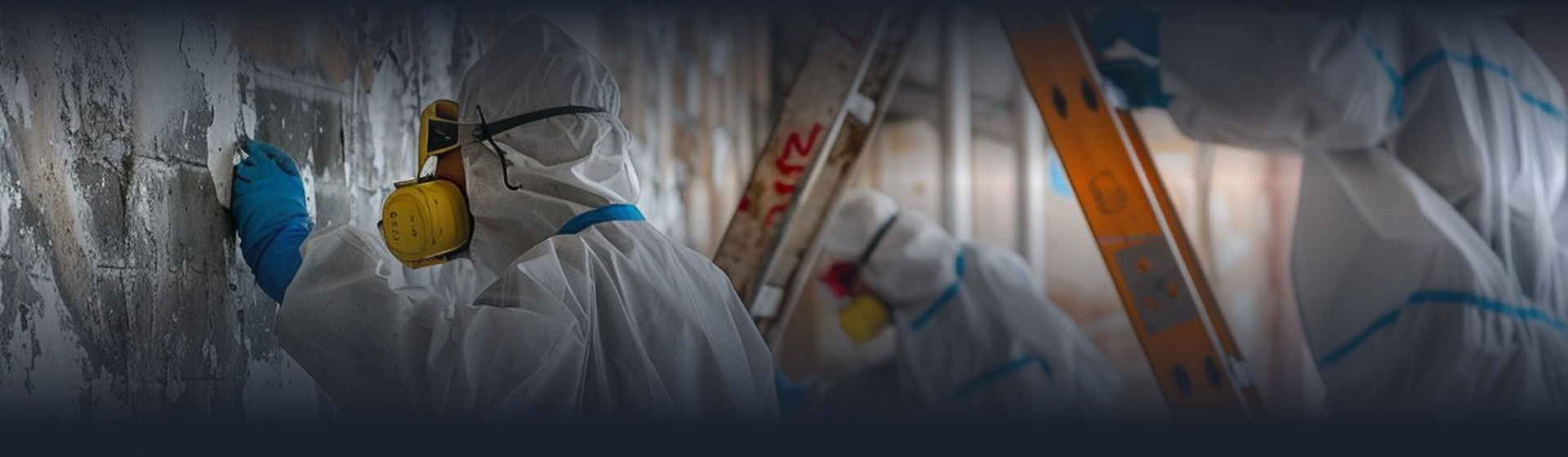
A comprehensive asbestos survey is the first line of defense in managing hazardous materials. Our inspectors walk the property to identify every material that might carry a risk based on its age and application. We document these areas with detailed photos and location maps to ensure nothing is overlooked. This process is essential for any building owner planning a demolition or major renovation.
- Limited Surveys: Focus on a specific room or material to support minor repairs.
- Comprehensive Surveys: Evaluate the entire structure before major demolition projects.
- Targeted Inspections: Identify specific hazards requested by lenders or insurers.
What to Expect from an Asbestos Survey Report
Once our field work is complete, we provide an asbestos survey report that outlines every sample taken and its current condition. This document is a vital tool for property managers and construction teams. It classifies materials as either friable, meaning they can be easily crumbled by hand and pose a higher risk, or non-friable, where the fibers are bound in a solid matrix.
The report gives you a clear roadmap for either managing the materials in place or scheduling their removal. Having a professional asbestos surveying document on hand also satisfies the requirements of many local permitting offices, allowing your renovation project to move forward without unnecessary administrative delays.
Know What’s in Your Building Before Work Begins
Asbestos was widely used in construction materials throughout much of the 20th century. Buildings constructed before 1980 are particularly likely to contain asbestos-containing materials (ACMs) in floor tiles, ceiling tiles, pipe insulation, roofing materials, siding, and joint compound. When those materials are disturbed during renovation or demolition, asbestos fibers can become airborne and pose a serious health risk.
All Sides Environmental provides professional asbestos removal and testing services for commercial and residential properties across Texas, coordinating inspections, sampling, laboratory analysis, and abatement planning with licensed contractors.
Why Professional Asbestos Testing is Essential
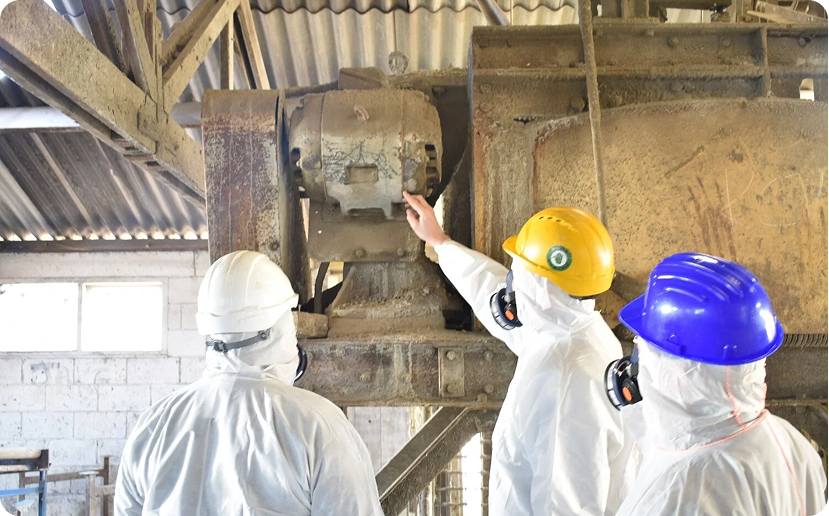
You cannot identify asbestos simply by looking at a material. Because the fibers are microscopic, many products containing them look exactly like modern, safe alternatives. This is why asbestos testing is a legal and practical requirement for many commercial and residential projects. If you are involved in a property transaction, your lender might require a certified report to confirm the building’s status.
Additionally, if materials like pipe insulation or ceiling tiles are damaged or deteriorating, testing determines if they need immediate attention. By getting the facts early, you prevent the accidental release of fibers that could lead to long-term health complications or expensive cleanup liabilities later.
HOW WE WORK
Our Process for Asbestos Testing
1

Pre-Inspection Consultation
We find out the property’s age, construction type, and planned scope of work. This helps us prioritize which areas and materials are most likely to contain asbestos and design a sampling plan accordingly
2

On-Site Inspection & Bulk Sampling
We visually inspect the building and collect bulk material samples from suspect areas using proper collection procedures. All samples are handled and packaged under regulatory protocols to prevent fiber release during collection.
3

Accredited Lab Analysis
Samples are analyzed by a certified laboratory using polarized light microscopy, the standard method for asbestos identification. Results identify the type of asbestos present and the percentage of content in each sample.
4

Report & Abatement Recommendations
You receive a written asbestos survey report documenting all samples, lab results, and recommendations. If asbestos-containing materials are found, we’ll outline what needs to be abated, managed in place, or addressed before your project begins.
 ALL SIDES ENVIRONMENTAL
The Science of Bulk Sampling
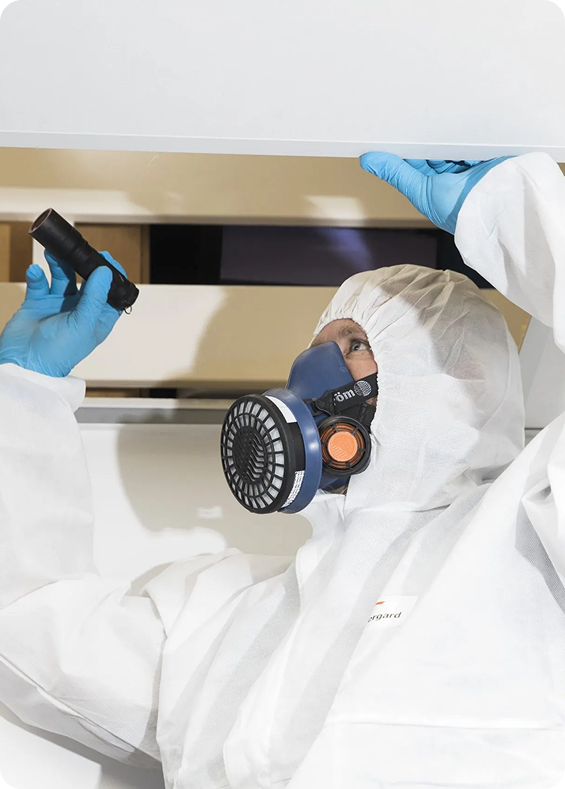
Collecting samples of suspect materials requires specialized tools and strict containment procedures. If sampling is done incorrectly, it can actually release the very fibers you are trying to identify. Our team uses industry-standard methods to extract small amounts of material for analysis at an accredited laboratory.
These labs use polarized light microscopy (PLM) to confirm the presence and percentage of asbestos fibers. This scientific approach is a core part of our asbestos inspection services. We prioritize accuracy and safety during every visit, ensuring that the results you receive are reliable and legally defensible for insurance or regulatory purposes.
OUR RECENT WORKS
Showcasing Our Latest
Environmental Successes


FAQ’S
How is asbestos testing done?
Asbestos testing involves collecting bulk samples of suspect building materials during an on-site inspection. These samples for asbestos are analyzed by an accredited laboratory using polarized light microscopy (PLM). The lab results confirm whether asbestos fibers are present and determine their percentage by weight.
What materials commonly contain asbestos?
In older buildings, asbestos is frequently found in vinyl floor tiles, ceiling tiles, pipe insulation, roofing felt, and drywall joint compound. It was also commonly used in spray-applied fireproofing and siding. Generally, any building constructed before 1980 should be inspected before renovation.
Is asbestos dangerous if left undisturbed?
Asbestos-containing materials that are in good condition and not being disturbed typically do not pose an immediate health risk. The hazard arises when the materials are cut, sanded, or broken during renovation, as this releases microscopic fibers into the air.
Who can remove asbestos in Texas?
In Texas, asbestos abatement must be performed by a contractor licensed by the Texas Department of State Health Services (DSHS). Individual workers must also hold specific licenses for their roles. All Sides Environmental coordinates with these licensed professionals to ensure safe removal.
Do I need an asbestos inspection before renovating?
Yes, federal and state regulations often require an asbestos inspection before any renovation or demolition that might disturb regulated amounts of building materials. Many contractors also require a clearance report before they will begin work to ensure their employees are not exposed to hazards.
OUR TESTIMONIALS
Honest Words from Clients Who’ve
Worked with Us

– Juan P. Domínguez
Customer
A tenant complained of headaches and a strange smell that no one else noticed. All Sides Environmental’s IAQ testing pinpointed elevated VOCs from new flooring adhesive, not mold or other previously considered issues. We fixed it fast, and the tenant stayed. Their expertise saved the relationship.

– Lewis Okser
Customer
Our Phase I flagged a recognized environmental condition on a Houston-area tract. All Sides Environmental decoded complex Phase II findings into plain language, explaining exactly what contamination levels meant for our plans. This clarity helped us confidently decide whether to proceed, that’s rare expertise in this field.
– Lena Brewster
Customer
Renovating a late-70s facility wing, our contractor required asbestos clearance. Dean’s team sampled floor tiles, ceiling material, and pipe insulation on short notice, delivering a report in four days, and flagged an area we’d overlooked. Their thoroughness saved us from a costly mid-renovation surprise.
– Joanna Prentice
Customer
Two companies gave us a clean bill of health, but something felt off. The All Sides team dug deeper and inspected longer. They used tools that looked inside the walls near our HVAC closet and found a hidden mold colony. All Sides oversaw remediation end-to-end, and we tested clean and received our clearance certificate within a week.
– Randy Cabrera
Customer
Three weeks from closing on a Katy strip mall, our lender suddenly required a Phase I ESA. All Sides scheduled us in two days, was on-site by Thursday, and delivered the report before our deadline. The lender accepted it without question, and I’ve since referred them twice.
