
When It’s Worth Getting a Mold Inspection
Mold doesn’t always show up as an obvious patch on the wall. Here are common reasons people call us:
- You notice a musty smell that won’t go away
- Someone in the home/building has unexplained respiratory symptoms
- You’ve had water damage, flooding, or a roof/plumbing leak
- You’re buying or selling a residential or commercial property
- You want a second opinion after a missed or unclear inspection
Here’s What We Look at During Every Inspection
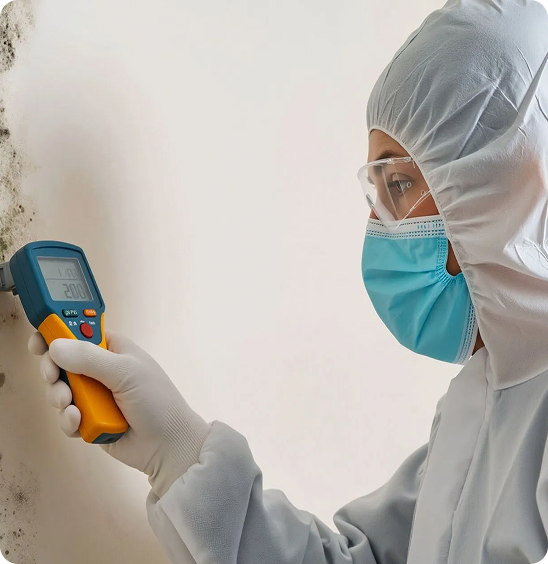
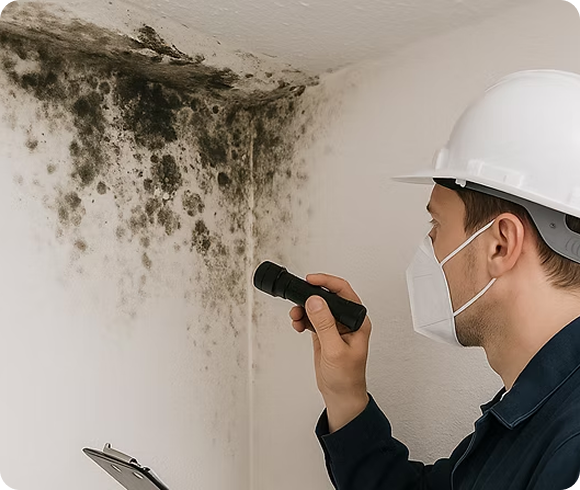
- Visual inspection of accessible areas (walls, ceilings, flooring transitions)
- Thermal imaging to help locate hidden moisture and suspected leak paths
- Moisture readings using professional-grade meters
- HVAC systems, ductwork, and air handler areas
- Crawlspaces, attics, and areas around plumbing fixtures
- Crawlspaces, attics, and areas around plumbing fixtures
- Surface sampling where growth is visible or strongly suspected
How Mold Work Is Handled in Texas
Texas requires a separation between mold assessment and mold remediation on the same job. That means:
- A TDLR-licensed Mold Assessment Consultant (MAC) performs the inspection and writes the remediation protocol.
- An unaffiliated TDLR-licensed Mold Remediator performs the cleanup following the protocol prepared by the MAC.
- The MAC returns for clearance to confirm the space is ready, and the remediator can then issue clearance documentation.
We do not perform remediation directly. We work with some of the most trusted licensed remediators in our areas to ensure that your project is completed correctly the first time.
Find the Mold Before It Gets Worse
If you’re a homeowner who just spotted something suspicious, or you manage a commercial space where people are noticing odors or symptoms, we can help. We’re a TDLR-licensed Mold Assessment Consultant (MAC), and our job is to inspect, document, and (when it adds value) test, so you know what you’re dealing with and what the next step should be.

What Is Mold Inspection & Testing?
A mold inspection is a hands-on assessment of a property to look for visible growth, moisture intrusion, and the conditions that allow mold to keep returning. Mold testing adds lab data by collecting air and/or surface samples and sending them to an accredited laboratory to identify spore types and levels.
Together, inspection plus testing can give you a much clearer picture, especially when mold is suspected behind drywall, under flooring, inside HVAC areas, or in other places you can’t easily see.
HOW WE WORK
Our Process for Mold Inspection & Testing
1

You tell us what’s happening
We start with a brief conversation about what you’ve noticed: odor, spots, symptoms, or water damage, so we focus on the right areas.
2

Full on-site inspection
We inspect key building areas, document conditions with photos/notes, and take moisture readings to understand what’s driving the issue.
3

Targeted sampling (when useful)
If samples will help answer the decision, we collect air/surface samples and submit them to an accredited lab.
4

Report, protocol, and next steps
You receive a written report with findings and recommendations. If remediation is needed, we provide clear guidance and can coordinate with a separate licensed remediator.
 ALL SIDES ENVIRONMENTAL
Why Mold Is So Common in Texas (Especially the Gulf Coast)
Heat, humidity, and storm-driven water intrusion create ideal conditions for mold growth, particularly in spaces with limited airflow. Mold can develop behind drywall, under flooring, and around HVAC systems where moisture persists unnoticed.
Addressing it early protects building materials and helps prevent indoor air quality problems that can disrupt daily life at home or productivity at work.
OUR RECENT WORKS
Showcasing Our Latest
Environmental Successes

FAQ’S
What’s the difference between mold inspection and mold testing?
Inspection is the on-site assessment for moisture conditions and visible indicators. Testing adds lab data from air or surface samples. Testing is most useful when it supports a clear decision, like documentation, confirmation, or post-work verification.
Do I need an inspection if I can already see mold?
Yes. Visible growth often points to a moisture driver and may not show the full extent. An inspection helps identify likely sources and whether other areas should be evaluated.
Are you TDLR licensed for mold work in Texas?
Yes. All Sides Environmental is a TDLR-licensed Mold Assessment Consultant (MAC). License information can be provided upon request.
Do you provide mold remediation, too?
No. In Texas, mold assessment and remediation must be performed by separate companies on the same job. We can coordinate with trusted licensed remediators.
How long does it take, and when do results come back?
Many residential inspections take about 1–3 hours, depending on size and complexity. If sampling is performed, lab turnaround is commonly a few business days.
OUR TESTIMONIALS
Honest Words from Clients Who’ve
Worked with Us

– Juan P. Domínguez
Customer
A tenant complained of headaches and a strange smell that no one else noticed. All Sides Environmental’s IAQ testing pinpointed elevated VOCs from new flooring adhesive, not mold or other previously considered issues. We fixed it fast, and the tenant stayed. Their expertise saved the relationship.

– Lewis Okser
Customer
Our Phase I flagged a recognized environmental condition on a Houston-area tract. All Sides Environmental decoded complex Phase II findings into plain language, explaining exactly what contamination levels meant for our plans. This clarity helped us confidently decide whether to proceed, that’s rare expertise in this field.
– Lena Brewster
Customer
Renovating a late-70s facility wing, our contractor required asbestos clearance. Dean’s team sampled floor tiles, ceiling material, and pipe insulation on short notice, delivering a report in four days, and flagged an area we’d overlooked. Their thoroughness saved us from a costly mid-renovation surprise.
– Joanna Prentice
Customer
Two companies gave us a clean bill of health, but something felt off. The All Sides team dug deeper and inspected longer. They used tools that looked inside the walls near our HVAC closet and found a hidden mold colony. All Sides oversaw remediation end-to-end, and we tested clean and received our clearance certificate within a week.
– Randy Cabrera
Customer
Three weeks from closing on a Katy strip mall, our lender suddenly required a Phase I ESA. All Sides scheduled us in two days, was on-site by Thursday, and delivered the report before our deadline. The lender accepted it without question, and I’ve since referred them twice.