Solutions From Every Angle 

PCA Report for Texas commercial property condition assessment

When a commercial property transaction is moving toward closing, lenders, investors, and buyers need more than a cursory look at the building. A PCA report, short for property condition assessment report, is the formal document that tells you exactly what you’re acquiring: the physical condition of the structure, its major systems, deferred maintenance, and the capital costs on the horizon.

All Sides Environmental provides PCA reports for commercial properties across Texas, following ASTM E2018 standards. Our assessments cover everything a lender or investor needs to make an informed decision about a property, documented in a report that holds up through underwriting.


What Is a PCA Report and Why It Differs from a Standard Inspection

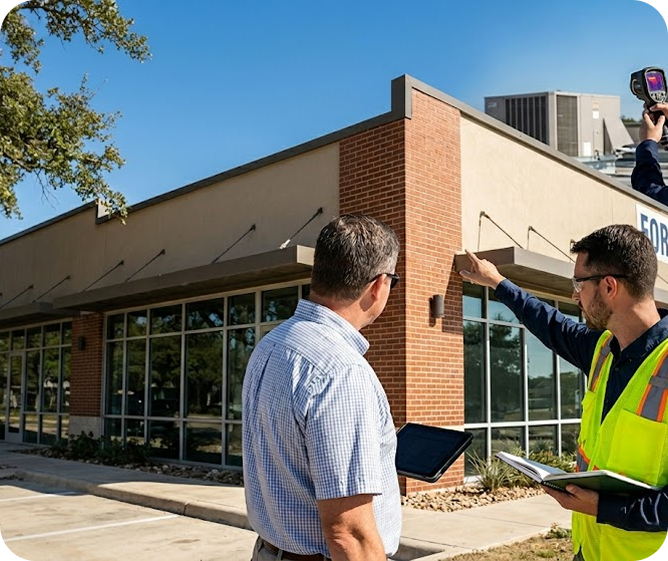
A property condition assessment report is not the same as a home inspection or a general building walkthrough. A PCA is an engineering-based evaluation of a commercial property’s physical condition, produced to ASTM E2018 standards, and designed specifically to support financial and lending decisions. The report documents current deficiencies, estimates the remaining useful life of major building systems, and projects capital expenditure requirements over a defined period, typically 12 years for commercial mortgage transactions.

What is a PCA report in practice? It’s a risk and cost document. Lenders use it to assess collateral condition and set reserve requirements. Buyers use it to identify material deficiencies before closing and to negotiate price adjustments where warranted. Property managers use it to plan capital improvements and maintenance budgets. The building assessment report produced at the end of the process is the shared reference point for all of those decisions.

PCA Report inspection of commercial building structural systems
PCA Report evaluation of roofing HVAC electrical and plumbing systems

What a Property Condition Assessment Report Covers

A PCA report evaluates all major systems and components of a commercial building. The scope follows ASTM E2018 and typically includes the following areas:

  • Structural components: foundation, framing, exterior walls, and roof structure
  • Roofing systems: condition, age, estimated remaining life, and drainage performance
  • Mechanical, electrical, and plumbing (MEP) systems: HVAC, electrical panels, plumbing supply and waste
  • Site improvements: parking lots, lighting, signage, grading, and drainage
  • Interior finishes: flooring, ceilings, partitions, and common area conditions
  • Life safety systems: fire suppression, alarms, emergency lighting, and egress
  • ADA accessibility: observable compliance conditions and deficiencies

Each deficiency identified in the walkthrough is documented with photographs, a description of the condition, an opinion of probable cost to remedy, and a recommended timeframe for addressing the issue. The PCA property condition assessment produces two summary tables: one for immediate repair needs and one for longer-term reserve requirements.

Who Orders a Real Estate PCA and When

A real estate PCA is ordered by different parties for different reasons, but all share the same underlying need, an objective assessment of a building’s physical condition before committing capital.

  • Buyers and investors use the PCA report to identify deficiencies before closing and inform purchase price negotiations
  • Commercial lenders and CMBS conduit lenders require a PCA as a condition of financing to evaluate collateral risk and set replacement reserves
  • Sellers commission PCA reports before listing to understand and disclose property conditions, and to avoid surprises during buyer due diligence
  • Property managers and asset managers use PCA environmental and physical findings to plan capital programs and annual maintenance budgets
  • Equity investors and fund managers use commercial property condition reports for portfolio acquisitions and asset management planning
PCA Report documentation of commercial property repairs and deficiencies

Need a PCA report for a Texas commercial property? Contact All Sides Environmental 

REPORT DELIVERABLES

What Your PCA Report Includes

The property condition assessment report we deliver follows ASTM E2018 and is structured to meet the requirements of institutional lenders, rating agencies, and investment committees. It includes a narrative summary of property type and overall condition, system-by-system findings with photograph documentation, an Immediate Repairs Table identifying capital needs and estimated costs, a Replacement Reserve Table projecting capital expenditures over a 12-year term, and the assessor’s opinion on remaining useful life for major systems.

Where a PCA is completed alongside a Phase I Environmental Site Assessment, which is common for commercial transactions, we coordinate both scopes so the timeline and site visit are aligned. Our Phase I Environmental Site Assessment services follow ASTM E1527-21 and are completed by qualified Environmental Professionals accepted by lenders statewide.

For properties where the PCA identifies concerns about building systems that may affect indoor occupant conditions, HVAC performance issues, moisture infiltration, or ventilation deficiencies, we can also coordinate indoor air quality testing as part of the same site engagement.

PCA Report capital planning and replacement reserve assessment

A PCA report is a property condition assessment report, a formal engineering evaluation of a commercial building’s physical condition, produced to ASTM E2018 standards. It documents existing deficiencies, estimates remaining useful life of major systems, and projects capital expenditure requirements. Lenders, buyers, and investors use it to make informed decisions about risk and cost before finalizing a transaction.

A PCA report covers the structural components, roofing, mechanical systems (HVAC), electrical systems, plumbing, site improvements, interior finishes, life safety systems, and ADA compliance observations. Each component is documented with its current condition, estimated remaining useful life, and an opinion of probable cost to repair or replace.

No. A PCA is a commercial-grade assessment conducted under ASTM E2018 by qualified engineers and construction professionals. It is significantly broader in scope than a residential home inspection, focused on risk quantification and capital planning rather than pass/fail observations, and produced for lenders, investors, and institutional buyers rather than individual homeowners.

Most PCA reports are completed within 10 to 15 business days from authorization and site access. The timeline depends on property size, system complexity, and document availability from the building owner. All Sides Environmental works to meet transaction timelines and can discuss expedited turnaround for time-sensitive closings.

PCA reports should be completed by qualified professionals with engineering, architecture, or construction expertise and specific experience in commercial building assessment under ASTM E2018. All Sides Environmental’s assessors bring direct commercial property assessment experience and produce reports that are accepted by institutional lenders without modification.

Frequently Asked Questions

PCA Report Questions We Hear Before Every Transaction

Phase I ESA for Land Development wetlands and ecological assessment

Order Your PCA Report with All Sides Environmental

Contact Form

What is 6+6?

CONTACT US